
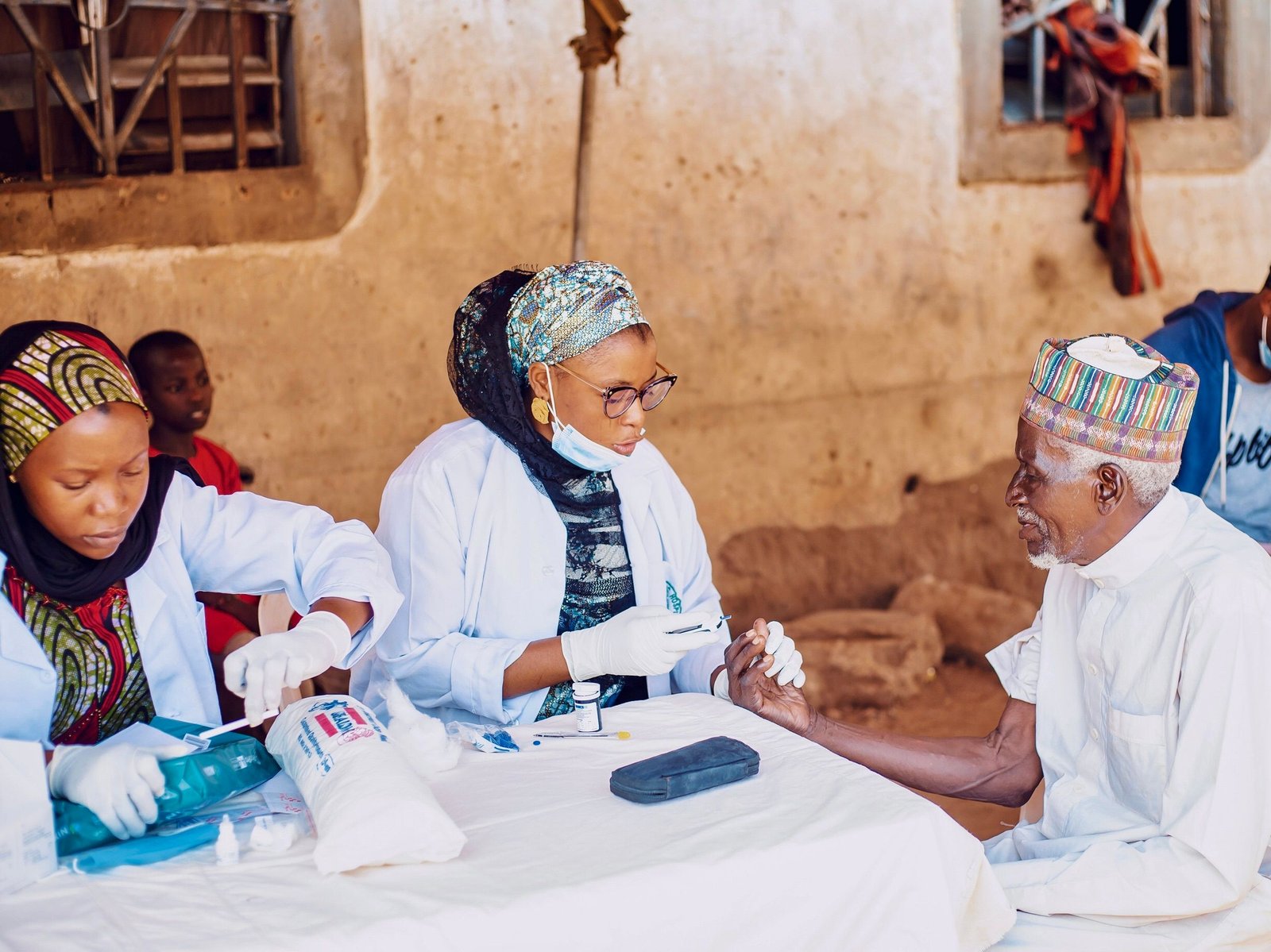
Applying Economic Approaches to Address a Cross-Border Malaria Challenge Between South Africa and Mozambique
Download DocumentDeep Dive Overview
In 2017, South Africa experienced a malaria outbreak while pursuing malaria elimination. As an upper-middle-income country, it did not meet the eligibility threshold for Global Fund support. The Department of Health needed to mobilise domestic resources, but national malaria spending had stagnated since 2008. A technical task team of multidisciplinary experts, including health economists, developed an economic modelling framework to demonstrate both the effectiveness of outbreak control strategies and their projected economic outcomes.
The model evaluated three strategic scenarios: Business as usual (continuation of current efforts), Accelerate (scale-up of existing national activities), and Source Reduction (combining scale-up with targeted interventions in southern Mozambique). A critical insight was that controlling malaria in southern Mozambique is a prerequisite for South Africa to successfully eliminate the disease domestically. The evidence-led approach resulted in a 36% increase in domestic malaria financing and the creation of a new conditional grant to ring-fence funding for elimination activities.
Policy Recommendations
Health departments should move beyond traditional budget requests by utilising mathematical transmission modelling and economic analysis to demonstrate the feasibility and financial benefits of their goals
Health departments should involve diverse experts in their projects. Include epidemiologists, economists, and mathematical modellers alongside partner organisations
To avoid the risks of one-time allocations or funding diversions, health departments should advocate for dedicated grants that are "ring-fenced" for specific health goals
Consider a co-financing mechanism, for diseases that can easily cross borders, where a country provides funding support to a neighbouring nation's health efforts to reduce imported cases
Health departments must provide training and support for provincial or district-level managers to ensure they have the required skills to monitor the spending of specialised grants for reporting and accountability purposes
Key Numbers
increase in domestic malaria financing
additional domestic funding mobilised
return on every $1 invested nationally
allocated for cross-border co-financing
Deep Dive Summary
How South Africa used an economic investment case and mathematical transmission modelling to secure a 36% increase in domestic malaria funding, including targeted cross-border source reduction in neighbouring Mozambique.
Content Type
Case Study
Region
Southern Africa
Author
Research Team
Read Time
10 min
Key Findings
Translating disease control into a macroeconomic model convinced the treasury to increase domestic malaria funding by 36% (approximately USD 21 million).
Economic modelling demonstrated that malaria elimination in South Africa is biologically impossible without funding source reduction in neighbouring Mozambique.
The model predicted a national return on investment of USD 4.20 in South Africa, plus an additional USD 3.01 realised in southern Mozambique.
South Africa became the first SADC country to successfully mobilise such a significant increase in domestic financing for both national and regional malaria efforts.